Sn–Fe Dual-Metallic Nanoparticles on S,N-Codoped g-C₃N₄-Derived Tubular Carbon as an Efficient Bifunctional Catalyst for Oxygen Reduction Reaction and Oxygen Evolution Reaction
Abstract
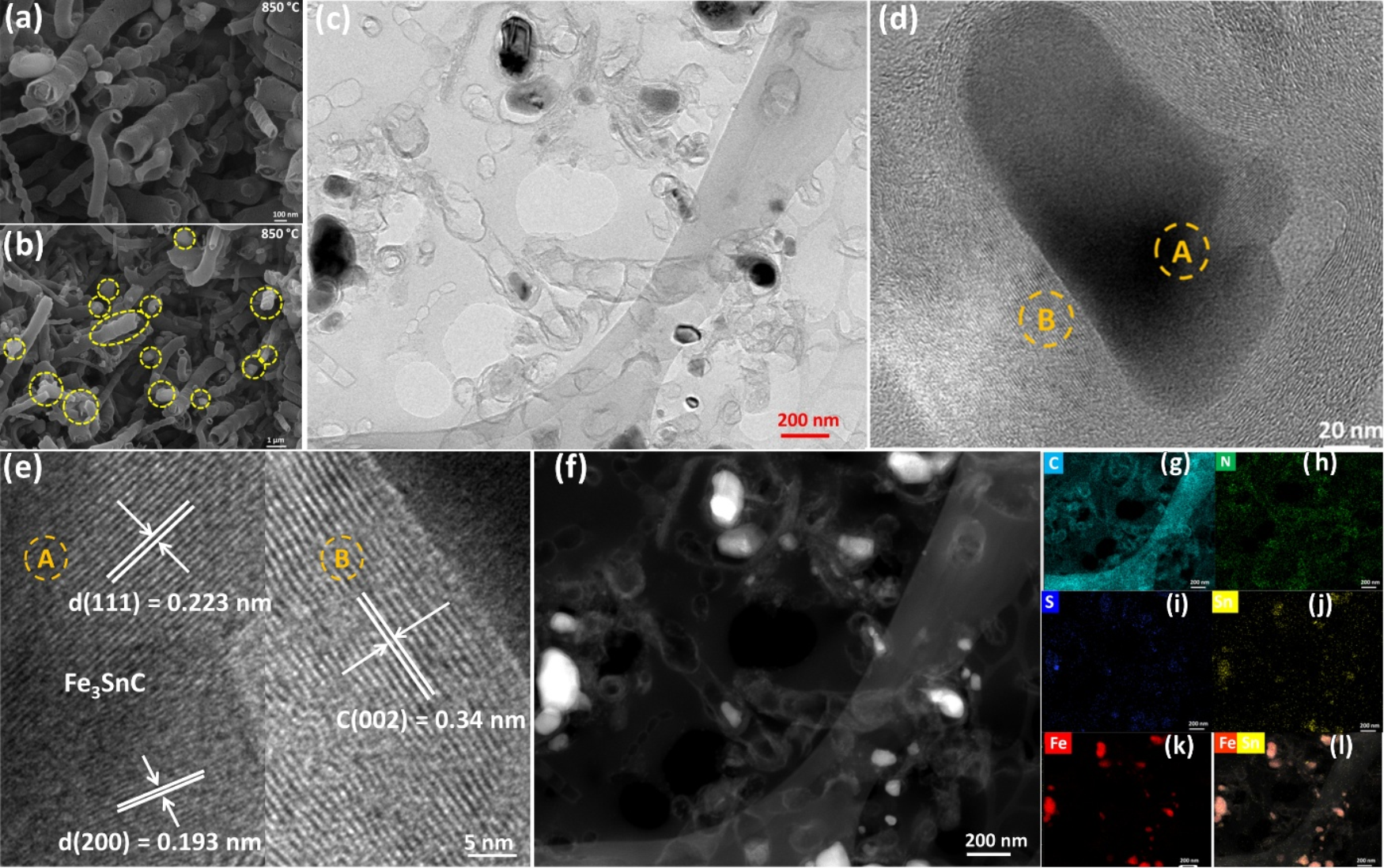
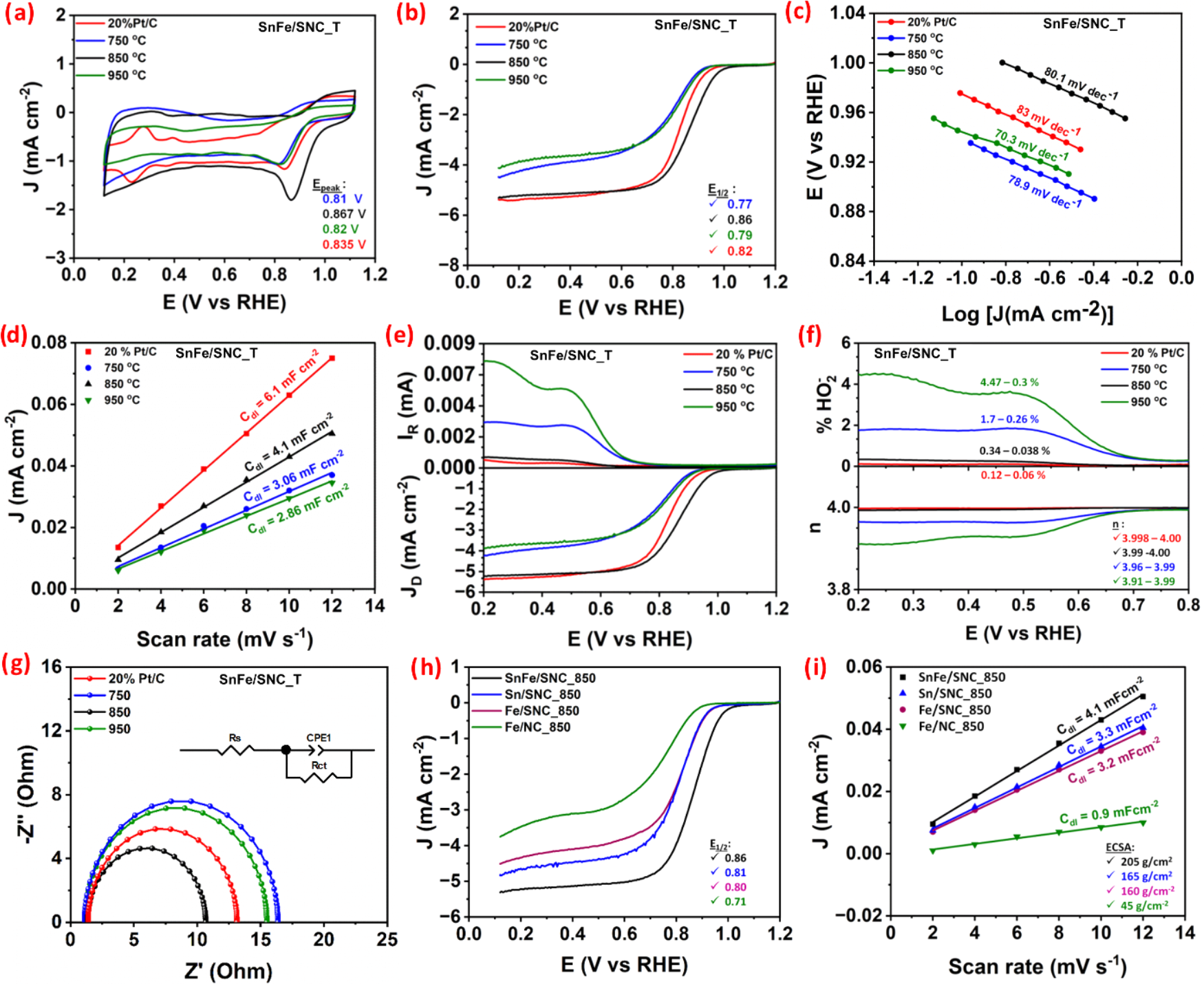
Developing cost-effective, high-performance bifunctional electrocatalysts for the oxygen reduction reaction (ORR) and oxygen evolution reaction (OER) is crucial for advanced clean energy technologies. This work details Sn−Fe bimetallic nanoparticles anchored on S,N-codoped graphitic carbon nitride (C₃N₄)-derived tubular carbon (SnFe/SNC_T), synthesized via a facile pyrolysis method at 850 °C (SnFe/SNC_850). The optimized SnFe/SNC_850 catalyst, characterized by a distinct bamboo-like tubular morphology, demonstrates superior ORR activity with a half-wave potential (E₁/₂) of 0.86 V vs RHE in 0.1 M KOH, surpassing commercial Pt/C (0.82 V). Furthermore, it exhibits excellent OER performance, requiring only 340 mV overpotential to achieve 10 mA cm⁻², and displays remarkable overall bifunctionality. When SnFe/SNC_850 is integrated into an anion exchange membrane fuel cell (AEMFC), it delivers a peak power density of 277 mW cm⁻², significantly outperforming Pt/C-based cells (168 mW cm⁻²). The catalyst also demonstrates exceptional durability, with only 20 mV of E₁/₂ decay after 30,000 cycles, compared to 50 mV for Pt/C. This enhanced performance is attributed to the synergistic interplay between Fe−Nₓ/Fe−Sₓ active sites and intermetallic Fe₃SnC/FeS domains. These findings establish SnFe/SNC_850 as a highly promising nonprecious-metal bifunctional electrocatalyst for practical energy-conversion applications.
🔬 Key Findings
Superior ORR Activity Surpassing Commercial Pt/C: SnFe/SNC_850 achieves a half-wave potential (E₁/₂) of 0.86 V vs RHE in 0.1 M KOH, surpassing commercial Pt/C (0.82 V), setting a new benchmark for non-precious metal catalysts.
Excellent OER Performance with Low Overpotential: The OER requires only 340 mV overpotential to reach 10 mA cm⁻², demonstrating excellent bifunctional catalytic performance.
AEMFC Peak Power Density Far Exceeding Pt/C: SnFe/SNC_850-based AEMFC delivers a peak power density of 277 mW cm⁻², significantly outperforming Pt/C-based cells (168 mW cm⁻²).
Exceptional Durability Over 30,000 Cycles: After 30,000 accelerated durability cycles, SnFe/SNC_850 exhibits only 20 mV of E₁/₂ decay, far lower than Pt/C's 50 mV, demonstrating superior long-term stability.
Synergistic Fe−Nₓ/Fe−Sₓ and Fe₃SnC/FeS Effects: The enhanced ORR/OER activity originates from the synergistic interplay between Fe−Nₓ/Fe−Sₓ active sites and intermetallic Fe₃SnC/FeS domains, providing both high activity and stability.
📊 Key Figures